
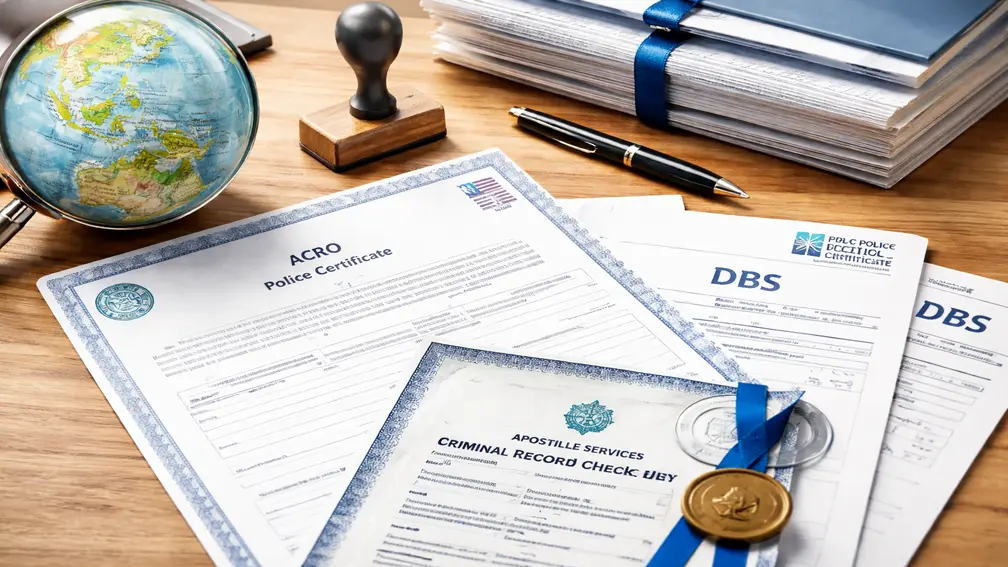
Getting ready to live, work, or study in another country can be exciting, but sorting out your documents is often complicated. For most international moves or job applications, you must show you are reliable and have a clear record. This means you need background checks. Still, holding the right certificate by itself won’t always work; authorities abroad usually want evidence that it’s genuine.
In this guide, you’ll see how to get your checks verified so they meet foreign legal standards without unnecessary stress.
What Is an Apostille for a Criminal Record Check?
An apostille certificate for a criminal record check is an official government document that proves your background certificate is valid and real. It helps confirm that checks like a DBS certificate or an FBI report can be used outside of the UK for legal purposes. The process checks the actual signature, seal, or stamp on your document and approves it under the 1961 Hague Convention. Without this, most officials in other countries might not accept your paperwork as genuine.
4 Key UK Criminal Record Certificates for Apostille
There are four types of UK criminal record checks often needed for apostille purposes. These checks are important for moving abroad, applying for visas, or jobs outside the UK. Each one confirms your criminal history and usually needs to be checked and signed by a solicitor or a notary before the Foreign, Commonwealth & Development Office (FCDO) will attach the apostille certificate.
1. ACRO Police Certificate
If you are applying for a visa, job, or moving to countries such as the USA, Australia, or Canada, you will most likely be asked for this certificate. The ACRO Criminal Records Office provides this document, which includes any criminal convictions, warnings, or reprimands on your record. Foreign immigration and visa officials view this as the most reliable way to check your background. When you need an apostille, the ACRO certificate is usually the first document requested.
2. NPCC Police Certificate
ACRO certificates work at the national level, but you might also come across police checks linked to the National Police Chiefs’ Council (NPCC). These are used to confirm records found on local police systems in England and Wales. If a partner or employer asks for an NPCC check, it usually means they want local details in addition to national ones. The process is similar to getting an ACRO certificate apostilled—your NPCC document also needs to be an official original before you can get a stamp on a UK record.
3. DBS Certificate (Basic, Standard and Enhanced)
Basic disclosures include details of your spent and unspent convictions and are often needed for normal job applications. An Enhanced DBS Disclosure, however, provides more information. This version is required for roles that involve contact with vulnerable groups, such as working with children or elderly people. It will show all your convictions, cautions, as well as other information the police think is relevant. Either type must still be checked for authenticity so it can be accepted in another country.
4. Subject Access Requests and Other Police Letters
If you want to know exactly what details the police keep about you, you can request a Subject Access Report. This is a personal data request, not a typical certificate, but some foreign authorities may accept a signed letter from this process as proof of good conduct. It’s important the official letter has a proper signature for you to get an apostille. Always check if your destination country allows this type of document.
Can Electronic DBS Certificates Be Apostilled?
You can’t use a digital DBS certificate when applying for an apostille. The authorities will reject both electronic files and digital PDFs, as the e-Apostille service and normal paper process require physical documents only. You must provide the original, printed DBS certificate. Before it’s accepted, it nearly always needs to be certified by a UK solicitor or notary. Only after this step will the government issue the apostille.
Key points regarding the apostilling of DBS certificates:
- No E-Apostille: You cannot upload a digital PDF of your DBS check to get an apostille. The government systems strictly require a physical document to attach the legalisation certificate to. If you try to use a digital file, your application will almost certainly be rejected immediately.
- Certification Required: Before the FCDO sees your document, a registered legal professional must verify it. A solicitor or notary needs to sign and stamp the actual paper certificate. This step proves that the document is real and creates a bridge between you and the government office.
- Paper Process Only: The entire system relies on physical paperwork. You must send your actual certificate through the post to be processed. This ensures that the signature from the issuing body is wet ink and genuine, rather than a digital copy that could be easily altered or faked.
- Digital Translation: If you need your criminal record translated for a foreign government, do not translate the digital version. You must wait until the original paper document has the apostille attached. Then, a certified translator can translate both the certificate and the apostille stamp together for official use.

Common Situations Requiring an Apostilled Criminal Record Check
When you need to prove your background history to officials in another country, an apostilled criminal record check is essential. This step makes sure your background certificate is seen as genuine and valid for use abroad—it confirms the authenticity of a document for international checks. Usually, you will need this for things like applying for a visa, getting a job overseas, adopting internationally, or enrolling in studies outside the UK.
Visa and Immigration Applications
Most countries are very strict about who they let in for the long term. If you are applying for a work permit or residency in places like Spain or Italy, they will demand proof of a clean criminal record. This paperwork must be apostilled to be accepted.
Employment Abroad
If you want to work in a school, hospital, or government role overseas, the employer will check your background. They often ask for an apostilled check to ensure you are safe to hire. This is standard procedure to protect their citizens and institutions from potential risks.
Residency and Citizenship Applications
Applying for dual citizenship or a second passport is a complex legal process. Many nations require an apostilled background check to verify your character before they grant you status. This helps them ensure that new citizens do not have a serious criminal history in their home country.
Teaching and Regulated Professions Overseas
Schools and medical boards take safety incredibly seriously. If you plan to teach English or practice nursing abroad, you must prove you have no history of harming others. An apostilled ACRO certificate or DBS check gives these regulatory bodies the confidence to grant you a license to practice.
International Marriage or Civil Partnerships
Getting married in a different country can involve a surprising amount of red tape. Some countries require you to provide a certified criminal record check as part of the marriage license application. This is to prove you are an upstanding citizen before the ceremony can legally take place.
Studying Abroad
Universities sometimes request a certified background check before they offer you a place or a student visa. This is increasingly common for courses in healthcare or social work. They need to know that you are reliable and have a clean record before you arrive on campus.
Why Use a Professional Apostille Service in the UK?
Using a professional apostille service helps make sure your UK documents will be accepted abroad without trouble. These specialists know each step when dealing with the Foreign, Commonwealth & Development Office (FCDO) and help avoid common errors that lead to refusals. Most services work with registered agents, so they speed up the process and can quickly provide an apostille for your paperwork, saving you time and stress.
- Reducing Risk of Rejection: The government is very picky about paperwork. One small mistake, like a missing signature or wrong format, can cause your application to be rejected. Professionals know exactly what the FCDO looks for, so they check everything beforehand to ensure your application goes through smoothly the first time.
- Ensuring Correct Certification: Many people do not realise that documents often need to be signed by a solicitor before they can be apostilled. A professional service handles this legalisation step for you. They have the right contacts to get your checks issued correctly without you needing to find a lawyer yourself.
- Secure Handling of Sensitive Documents: Your criminal record contains private, sensitive information that you don’t want getting lost. Professional services use secure couriers and tracked systems to keep your documents safe. You can relax knowing your personal data is being handled with care and won’t end up in the wrong hands.
- Tracking and International Delivery: Once your document is ready, getting it back to you (or sending it directly to another country) can be stressful. Agencies offer reliable tracking so you can see exactly where your papers are. They handle the logistics of shipping, ensuring your important documents arrive safely at their final destination.
Why Choose Legalisation4you for Apostille of Criminal Record Checks?
Dealing with official paperwork and all the steps involved can be frustrating and slow. At Legalisation4you, we aim to make things straightforward. Our team takes care of both the solicitor certification and apostille application together, so you avoid delays and extra hassle. If you have a tight deadline or a complicated situation, we handle it. Whether your documents need a fast apostille or extra help, we make sure your paperwork is sorted for use worldwide.
The 4 Steps Process to Apostille an ACRO, NPCC, or DBS Certificate in the UK
When you need to use an ACRO, NPCC, or DBS certificate abroad, it must go through a process called legalisation. This ensures your UK-issued criminal record check will be recognised in other countries. For most criminal record checks, you need a paper apostille; digital (e-Apostilles) usually aren’t accepted for this type of document. Only the original, physical paperwork can be processed and approved.
1. Obtain the Correct Criminal Record Certificate
- ACRO/NPCC Certificates: Go to the official website and order your certificate. You must request a physical, printed copy that is signed in wet ink by an officer. Digital prints won’t work.
- DBS Certificates: Get your original Basic, Standard, or Enhanced DBS certificate. Note that DBS certificates are typically issued without a signature valid for legalisation, so you need the next step.
2. Check Eligibility for Legalisation
- ACRO/NPCC Certificates: Look closely at your certificate. It needs to have an original signature from an official at the issuing body. It might also have a specific seal or watermark. If these elements are missing or look like photocopies, the FCDO will reject it. Ensure the document is in good condition before you try to apply for an apostille.
- DBS Certificates: A standard DBS certificate is not automatically ready for the apostille process. It usually lacks the specific type of official signature the FCDO recognises directly. Therefore, you almost always need to have it certified by a UK solicitor or a notary public first. They will check the document and add their own signature and stamp to verify it.
3. Submission to the UK FCDO Legalisation Office
- ACRO/NPCC Certificates: Once you have your original document, you send it to the Legalisation Office. You can do this by post or through a registered service provider. You will need to pay the government fee and fill out a cover sheet. This is where they check the issuing body signature against their database to confirm it is real.
- DBS Certificates: After the solicitor has stamped your DBS check, you submit that certified version to the FCDO. They are technically verifying the solicitor’s signature, not the DBS check itself. This is why the solicitor step is so crucial. Without it, the FCDO cannot process the document, and you will face delays in getting your UK apostille.
4. Receiving Your Apostilled Document
- ACRO/NPCC Certificates: When the process is complete, the FCDO attaches the apostille certificate to the back of your police check. They will then post it back to you. It will have a raised seal or a unique reference number. You can now present this document to authorities in a Hague Convention country with confidence.
- DBS Certificates: You will receive your DBS certificate with the apostille attached, usually bound together with the solicitor’s certification sheet. Do not detach these pages, or you will invalidate the document. It is now ready to be presented in another country for your job or visa application. Make sure to keep it safe, as replacing it takes time.
Do You Need Embassy Legalisation After the Apostille?
Usually, you will not be asked for embassy legalisation after your document has an Apostille, as long as the country you are sending it to is listed under the 1961 Hague Convention. The Apostille certificate serves in place of further checks or stamps from an embassy or consulate, saving you time and extra cost. For countries not on the Hague list, extra steps will be needed. Always look up the official requirements for the specific country to avoid delays or problems with your documents.
Countries That Accept the Hague Apostille
By the start of 2026, more than 125 countries recognise documents approved with the Hague Apostille. This group includes countries like the UK, USA, Canada, Australia, most European nations, and even China (including Hong Kong and Macao). Thanks to this agreement, it has become much simpler to use UK criminal record checks beyond national borders. You no longer need to deal with several layers of embassy legalisation, as one certified apostille is accepted by all these countries.
Countries Requiring Additional Consular Legalisation
If your destination country is not a member of the Hague Convention, you’ll need extra steps after getting an apostille. This extra approval is called “embassy legalisation” or sometimes “superlegalisation.” For these places, getting just the apostille isn’t enough. First, you must have your document legalised with an apostille or a regular state certification. Then, you need to send it for final approval at the embassy or consulate of the country where you plan to use it. Expect this process to be longer and more expensive compared to Hague Convention countries.
Cost of Apostille for Criminal Record Checks
How much you will pay to obtain a criminal record apostille depends on the service speed and provider you choose. For regular processing, the fee is usually between £30 and £75. If you are in a hurry and need a quicker turnaround, prices can go up to around £78–£135. Using a private company costs more but can be much easier—they take care of the development office side and keep everything moving smoothly.
Common Issues When Apostilling Criminal Record Certificates
Getting an apostille for your criminal record certificate is often needed if you’re applying for a visa, moving abroad, or looking for work in another country. There are some common problems in this process that can make it slower or even stop your document from being accepted. If you know about these problems in advance, you can avoid them and save a lot of time, hassle, and money.
- Damaged or Altered Certificates: The FCDO is very strict about the condition of your documents. If your certificate is ripped, stained, or has writing on it that shouldn’t be there, they will likely reject it. Do not laminate your document either, as this prevents them from attaching the apostille properly. Keep your papers flat and clean.
- Expired or Outdated Police Certificates: Most foreign governments want to know your current status, not your history from five years ago. They often reject checks that are older than three to six months. Before you send your document for legalisation, make sure it is still within the validity period required by the country you are moving to.
- Name Discrepancies or Personal Detail Errors: Check that your name on the certificate matches your passport exactly. Small spelling mistakes or using a nickname can cause major headaches. If the details don’t match up perfectly, the foreign authority might refuse to accept the document, even if it has a valid seal or stamp from the apostille office.
- Apostille Rejection Reasons: Sometimes, applications get rejected because the signature on the document is not in the FCDO’s database. This happens if an official at the ACRO certificate office hasn’t registered their signature yet. Another common reason is sending a photocopy instead of the original. Always double-check submission guidelines to avoid these frustrating rejections.
How Long Is an Apostilled Criminal Record Check Valid?
Most of the time, an apostilled criminal record check will only be accepted if the certificate was issued in the last three to six months, not from the day the apostille was added. Even though an apostille certificate itself does not have an expiry date, authorities abroad want the background check to be recent. If your document is over 90 days or half a year old, there is a good chance it will be refused, as you could have new records or changes since then.
FAQ
Can I apostille a scanned copy of my criminal record certificate?
No, a scanned copy is not accepted for apostille. The Foreign, Commonwealth & Development Office (FCDO) only accepts the original hard-copy document to check the authenticity of the signature. Scans or digital files are just images—they can’t confirm the document is genuine. To get the stamp, you must post the actual certificate that was issued in the UK.
Do I need a new DBS check if my certificate is several months old?
Yes, in most cases you will. The majority of countries and overseas employers want to see a recent background check, usually from within the last three to six months. If your DBS certificate is older than that, it often will not be accepted, even once it has been apostilled. It’s a good idea to order a new certificate online to avoid problems or delays.
Can someone else apply for the apostille on my behalf?
Yes, someone else (like a trusted friend, a family member, or a professional service) can apply for an apostille on your behalf. You do not have to do it in person or show up at an office to issue apostilles. The person or service must have your original certificate and must fill in the forms correctly. Many people use organised services, as this tends to make the process simpler and avoids mistakes when you are tied up with other things.
Is an apostille required for EU countries after Brexit?
Yes, after Brexit, most UK documents (like criminal record checks) need an apostille for use in EU countries. Even though there are some separate rules, most EU nations now require UK paperwork to be apostilled, just like they would for any country outside the EU. For example, you will need this if you apply for a visa or want residency in Germany, Spain, or France.
Can I translate my criminal record certificate before obtaining an apostille?
It’s important to wait until you have the apostille fixed to your original English certificate. Once the apostille certificate is attached, you can get both the document and the apostille translated together. If you translate your document before adding the apostille, only the certificate will be translated and not the apostille itself. Many foreign authorities will not accept paperwork unless both parts are officially translated and legalised.
Can we legalise non-UK criminal records?
In most cases, the UK can only legalise documents that have been issued in the UK. If your criminal record or police clearance was made in another country, like Australia, you need to get the apostille from that country’s authority. The UK FCDO will not legalise foreign-issued documents, even if you’re currently living in Britain.
Can I apostille a criminal record check issued in Scotland or Northern Ireland?
Yes, it is possible. You can get a Disclosure Scotland certificate or one from Access Northern Ireland apostilled. The exact steps might be a bit different depending on which part of the UK the certificate comes from. Make sure you are using the original document, not a copy. Sometimes you will also need a solicitor to certify it, just as you would with checks from England and Wales, before sending it in for legalisation.