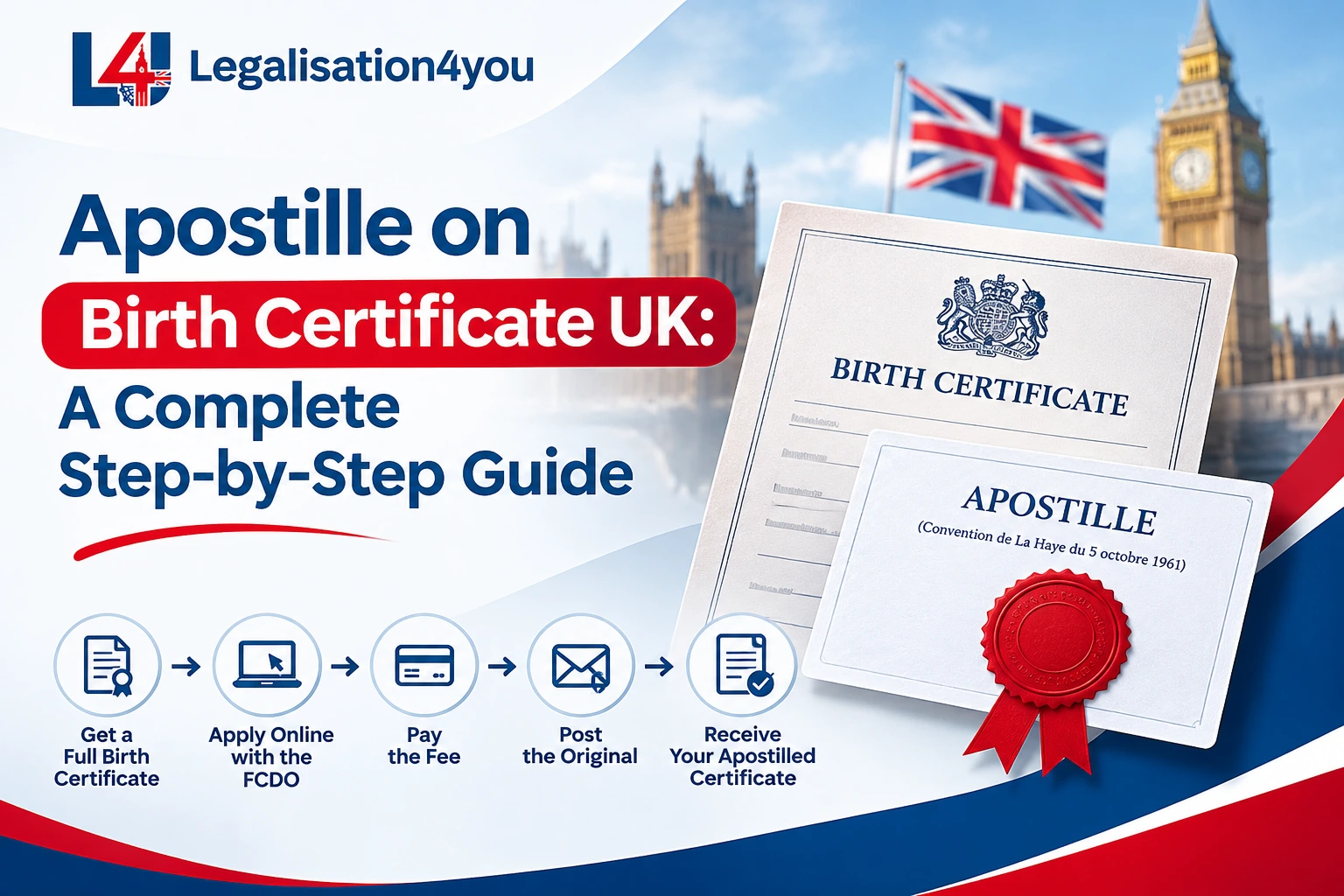
Getting an apostille on a birth certificate in the UK takes four steps. Order a full certificate, apply online through the FCDO, pay the fee, and post the original. The FCDO attaches the apostille and returns your birth certificate, ready for overseas use. Want to skip the costly mistakes? Keep reading.
Did you know? According to the Hague Apostille, the FCDO issues no e-Apostille for General Register Office records, so birth certificates need paper apostilles.
A move abroad, an overseas wedding, or a citizenship claim often needs proof of identity. Foreign officials want more than a plain certificate. They want an apostille. At Legalisation4you, we often see small errors delay these applications. This guide shows you how to avoid them.
Key Takeaways
- Order a full long-form certificate, because many foreign offices reject short versions of birth certificates.
- Check that your destination country joins the Hague Convention before you apply for any apostille.
- The FCDO issues only paper apostilles for birth certificates, so allow extra time for postage.
- Photocopies need solicitor certification first, while original register office certificates go straight to the FCDO.
- Non-Hague countries also need embassy legalisation after the apostille, so confirm requirements with them early.
Why Your Birth Certificate Needs an Apostille for Use Abroad
An apostille is an official certificate. It confirms that the signature, seal, or stamp on a UK public document is genuine. The FCDO issues it under the Hague Apostille Convention. Member countries then accept the document without extra checks. More than 120 countries use this system.
This apostille legalisation step does not check the facts on the certificate. It only confirms that the issuing official’s signature matches official records. Many people need a UK birth certificate apostille for visas, overseas marriages, school places, or child registrations abroad. Most documents apostille applications for degrees and marriage certificates follow similar rules.
Step-by-Step Process to Get Your Birth Certificate Apostilled
Here is how to apostille a document like a birth certificate, from start to finish. Follow these five steps in order.
Step 1: Order the Right Full Birth Certificate Copy
Order a full certificate from the General Register Office or your local register office. A full copy lists both parents’ details. A short certificate gives much less information and no details of parentage. Many foreign offices reject short copies. Photocopies usually need certification by a solicitor or notary first.
Step 2: Check Hague Convention Rules for Your Destination
Confirm that the destination country accepts apostilles. If it doesn’t, you need embassy legalisation after the apostille. Ask the receiving office whether it wants a paper apostille.
Step 3: Apply Online and Pay the FCDO Fee
Apply through the GOV.UK legalisation service. The standard paper fee is £45 per document, plus courier or postage costs. The service refunds your fee if it can’t legalise a document, but not if a recipient rejects a legalised one. Check the current fee before you apply.
Step 4: Send Your Original Certificate Safely
The documents apostille service gives you a postal address after you apply online. Scan your certificate first. Then use tracked, insured delivery.
Step 5: Receive Your Legalised Birth Certificate
The FCDO attaches the apostille and posts the document back. Check every name and date straight away. Need a translation? Get it after the apostille, unless the receiving authority says otherwise.
Which Route Fits Your Birth Certificate?
| Your situation | What you need |
| Full certificate from a register office | Apostille only |
| Photocopy of a certificate | Solicitor certification, then apostille |
| Short-form certificate | A full certificate first |
| Hague Convention country | Apostille only |
| Non-Hague country | Apostille, then embassy legalisation |
| Certificate issued outside the UK | Legalisation in the country of issue |
Benefits of a Correctly Apostilled Birth Certificate
A clean apostille on a UK birth certificate request brings four clear benefits.
Faster Acceptance of Your Legalised Birth Certificate
Officials in Hague countries recognise the apostille on sight. That means fewer queries and quicker decisions. Your application moves forward instead of stalling at the desk.
- Fewer follow-up requests from foreign offices
- Smoother visa and residency applications
Lower Risk of Rejection and Repeat Costs
A correct route saves money. A rejected document means new fees, new postage, and lost time. Careful checks at the start protect your budget.
- No repeat FCDO fees
- Fewer delays to visa or wedding dates
One Certificate for Many Countries
One apostille works across all Hague member countries. You don’t need separate stamps for each. That helps if your plans change.
- Useful if you move more than once
- Less paperwork for relocating families
Greater Confidence in Your Official Paperwork
You know the document is correct before you travel. That peace of mind matters when deadlines are tight.
- Clear proof of an official signature
- A document ready for visa desks and registrars
Common Mistakes That Delay Your Apostille
- Ordering a short certificate. Many authorities want parentage details.
- Sending a photocopy. It needs solicitor certification first.
- Skipping the destination check. Non-Hague countries need extra steps.
- Using untracked posts. Lost originals cost time and money.
Pro tip: Ask the receiving office for its exact requirements in writing before you order anything. Also allow extra time if you apply close to a deadline.
Get Your Birth Certificate Apostilled Without the Stress!
Don’t let paperwork delay your apostille on a birth certificate in the UK. Visit Legalisation4you and let the team check your document first. Standard apostille service starts from £85. Express next-day service starts from £95. You get clear updates, tracked return, and expert support from day one.
FAQs
1. How much does it cost to get an apostille on a UK birth certificate?
The FCDO charges £45 per document for the standard paper service, plus postage or courier costs. Private agents add their own fees. Always check GOV.UK for the current price before you apply.
2. How long does it take to get an apostille?
Timing depends on the service you choose and current demand. GOV.UK lists its own processing times. Private providers may offer standard or next-day options, so compare them against your deadline.
3. Can I get an e-Apostille for a birth certificate?
No. The FCDO does not offer e-Apostilles for General Register Office documents, including birth certificates. You need a paper apostille instead, so plan for postage and return delivery.
4. Do I need a solicitor or notary before the apostille?
Not usually for original register office certificates. They normally go straight to the FCDO. Photocopies, however, need certification by a UK solicitor or notary before you apply.
5. Does an apostille on a birth certificate expire?
The apostille itself carries no expiry date. Some foreign authorities do want a recently issued certificate, though. Ask the receiving office about its age limit before you order.