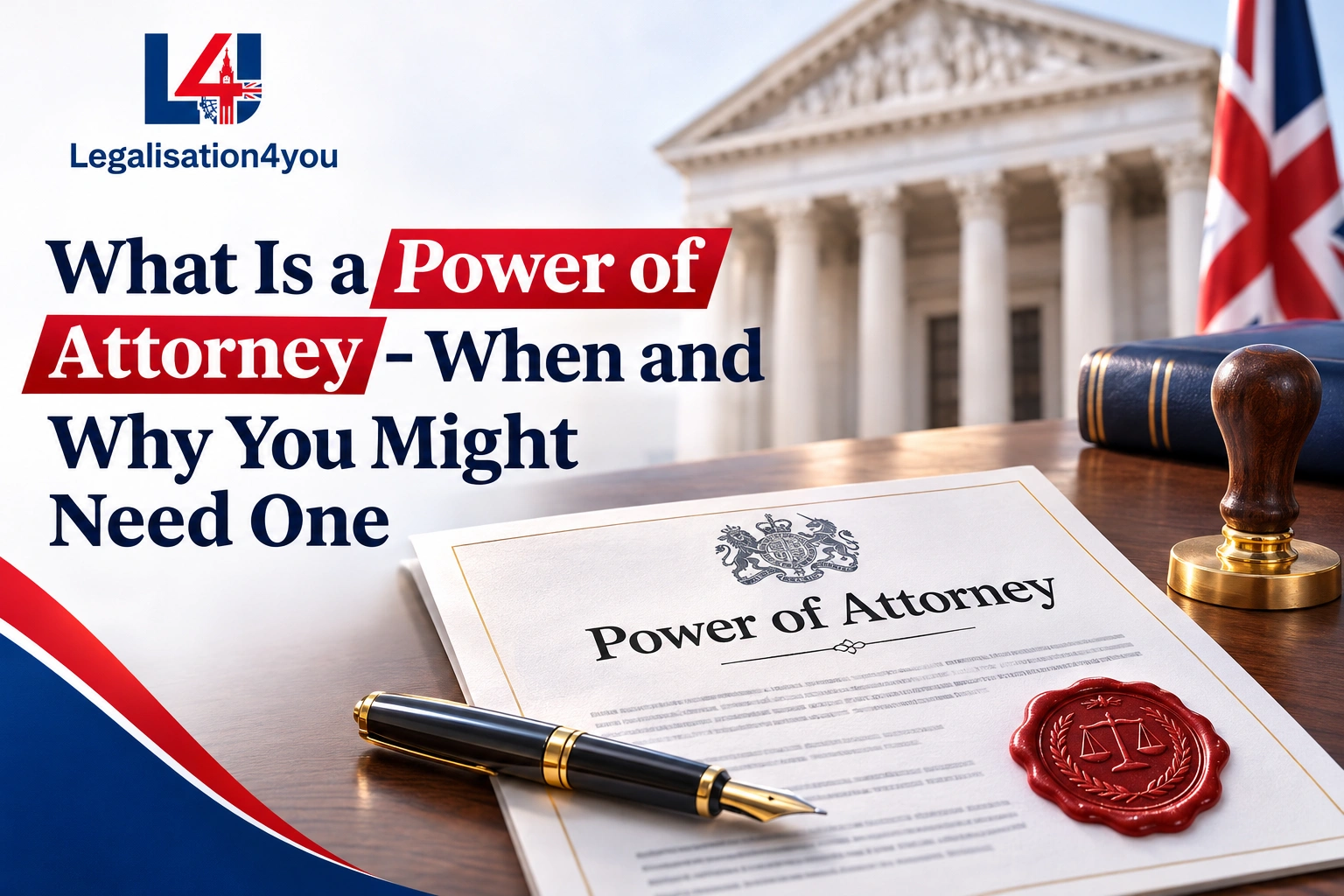
A power of attorney is a legal document. It lets you name a trusted person to act for you. They can handle your money, property, or care choices. Read on to learn when you need one and why it truly matters.
Did you know? According to the Gov.uk Office of the Public Guardian passed 10 million powers of attorney in October 2025.
That figure shows how many people now plan ahead. In this blog, we will explain what a power of attorney. You will understand the types, the steps, and the common traps. So, continue reading.
Key Takeaways
- Choose someone you trust, honest and reliable, to handle your money, your property, or your personal affairs.
- Your attorney can’t actually start using your lasting power of attorney until you’ve finished registering it with the OPG.
- Choose an ordinary, financial, or health and welfare power based on your personal needs.
- The smart move is to set all this up now, before illness or some unexpected turn makes it harder for you to make these decisions.
- And if you’re planning to use your power of attorney in another country, check the notary, apostille, and embassy attestation requirements first.
Understanding a Power of Attorney in Simple Terms
The power of attorney meaning is easy to grasp. It is a legal tool that gives another person authority to act for you. You are the donor. The person you choose is the attorney. Your attorney does not need to be a lawyer. Most people pick a spouse, an adult child, or a close friend. Whoever you choose, pick someone honest and calm under pressure.
Donor, Attorney and Legal Authority Explained
The donor stays in charge while they can make their own decisions. For lasting powers, your attorney must follow the Mental Capacity Act 2005. They must act in your best interests and keep your money separate from theirs.
How a Power of Attorney Works in Practice
Many people ask, “How does power of attorney work once I sign?” The steps are simple. You choose your attorney. You complete the forms and sign them. For a lasting power, witnesses and a certificate provider sign too. Your attorney then acts within the limits you set.
What Does a Power of Attorney Do Day to Day?
Clients often ask, What does a power of attorney do for my daily affairs?” It can cover many tasks:
- Managing money: paying bills and running bank accounts
- Handling property: selling, renting or maintaining your home
- Dealing with investments: buying or selling on your behalf
- Making care choices: treatment and where you live, under a health and welfare LPA
A health and welfare power only works when you cannot make your own decisions.

Main Types of Power of Attorney in the UK
| Type | What it covers | When it starts | If you lose capacity |
| Ordinary | Money and property | Straight away | Stops working |
| LPA: property and financial affairs | Money and property | Once registered, if you allow it | Keeps working |
| LPA: health and welfare | Care and treatment | Only when you cannot decide | Keeps working |
| Enduring (EPA) | Money and property | As set in the document | Keeps working once registered |
Choose the type that fits your needs. Many people make both LPAs for full cover. You cannot make a new EPA today. Old ones stay valid if signed correctly.
Government Power of Attorney: The OPG Route
Many people search for a government power of attorney, but it is not a separate type. They usually mean a lasting power made through GOV.UK. The Office of the Public Guardian (OPG) registers it. You cannot use the document until registration is complete. GOV.UK says registration takes 8 to 10 weeks if the application has no mistakes. The fee rose to £92 in November 2025, unless you qualify for a reduction.
Common LPA Mistakes to Avoid
Tens of thousands of applications get rejected each year. Freedom of Information figures show 48,945 rejections in 2024/25. Small errors cause many delays. Check page numbers, signatures and dates before you post anything.
When and Why You Might Need a Power of Attorney
Life can change in a single day. An accident, a stroke or dementia can leave you unable to decide. Without a plan, your family may need a court order to manage your affairs. That process is slow, costly and stressful. Here are common moments when this document helps:
- Illness or ageing: your attorney can pay bills and arrange care
- Living or working abroad: someone at home can sign papers for you
- Selling property overseas: your attorney can complete the deal
- Long hospital stays: family keep your affairs running
- Busy business owners: a trusted person can sign when you cannot
Using a Power of Attorney Abroad: Notary, Apostille and Attestation
Overseas authorities want proof that your document is genuine. A UK notary usually checks and certifies it first. Next, the FCDO adds an apostille. Some countries outside the Hague Convention also need embassy attestation. A solicitor can certify copies where needed. Always confirm the exact route before you start.
Do not wait for a crisis to decide for you. Act now and protect your family’s peace of mind.
Risks and Smart Safety Tips Before You Sign
This document gives real control to another person. So choose with care. Use these tips:
- Pick someone you trust fully. Honesty matters more than status.
- Name a replacement attorney. Your plan then survives if one cannot act.
- Set clear limits. Write down what your attorney can and cannot do.
- Talk to your family. Open chats prevent disputes later.
- Review it often. Update your document after big life changes.
Can You Cancel or Change a Power of Attorney?
Yes, if you still have mental capacity. You can cancel your LPA if you no longer need it or want to make a new one. Never write changes on the document itself. That can make it invalid. Tell the OPG about any change of name or address.

Get Your Power of Attorney Ready With Expert Help!
Now you know what is a power of attorney. So get ready to protect your future. Legalisation4You can check your document route before you pay. Our UK team coordinates the notary, apostille and embassy steps for you. Visit our website or call us now.
FAQs
1. What is the main purpose of a power of attorney?
It lets you appoint someone to make decisions for you. This helps if you are ill, away, or unable to decide.
2. What is the downside of a power of attorney?
Your attorney gets real power, so abuse is possible. Choose carefully, add safeguards and tell your family.
3. What is the difference between a power of attorney and a lasting power of attorney?
An ordinary power stops if you lose capacity. A lasting power keeps working and needs OPG registration.
4. Can an attorney take money from my bank account?
Only to manage your affairs, in your best interests. Misuse can trigger an OPG investigation.
5. What happens to a power of attorney when someone dies?
It ends at death. The executor named in the will then takes over the estate.