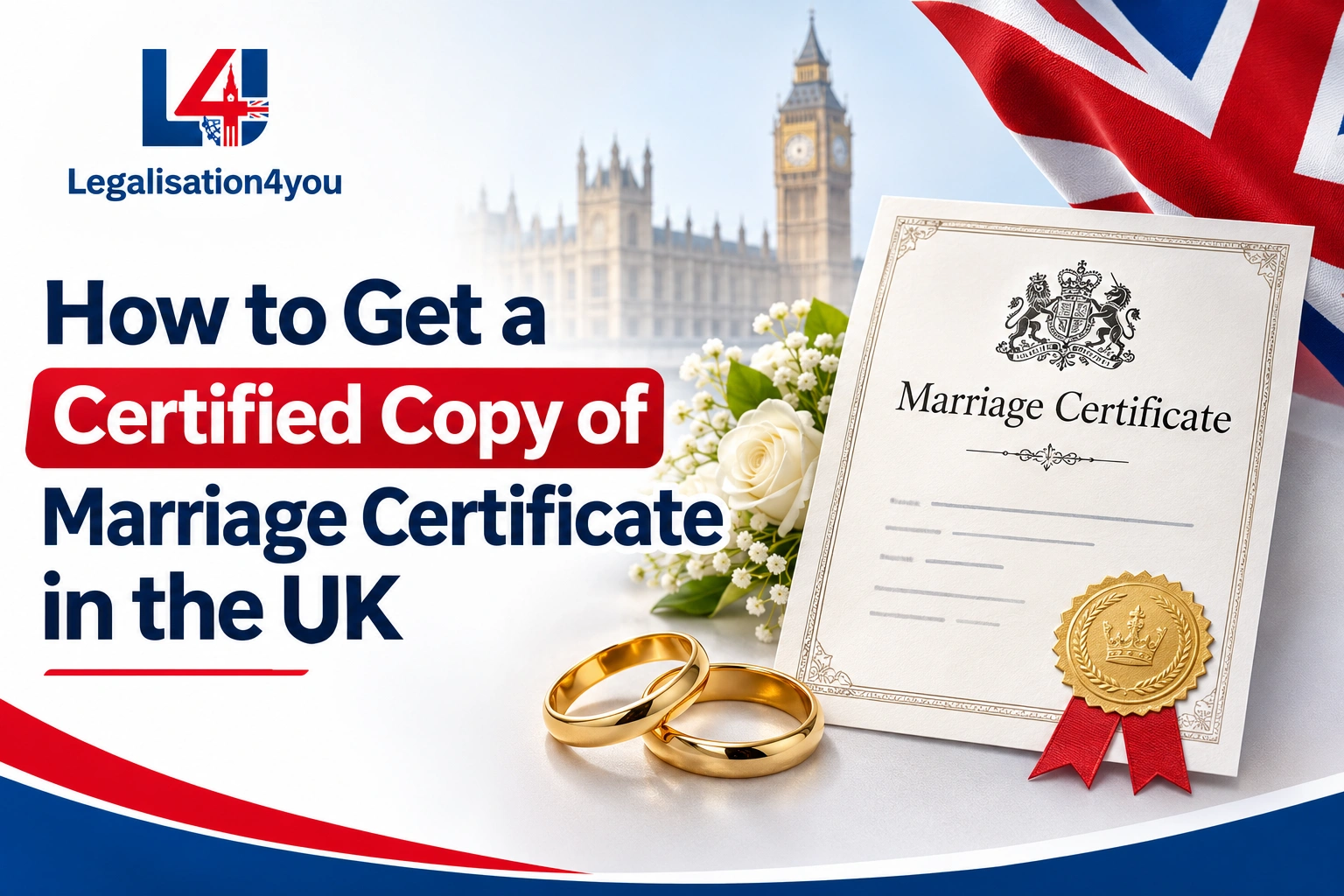
To use a UK marriage record overseas, you must get it stamped with an apostille by the FCDO. This stamp proves the registrar’s signature and seal are genuine. Countries in the Hague Convention then accept it without any extra checks.
Did you know? The HCCH says the Apostille Convention now has 130 Contracting Parties. So one small stamp can open doors almost everywhere.
Still, an apostille marriage certificate UK request can feel confusing at first. We get it. Legalisation4You helps couples with this task every single day. So we’ve kept this guide simple, with clear steps, real costs and the traps to avoid.
Key Takeaways
- An apostille proves your UK marriage certificate is genuine and ready for overseas use.
- Only the FCDO Legalisation Office issues the stamp. Solicitors and notaries certify copies only.
- Marriage certificates need a paper apostille. The e-Apostille service doesn’t cover them.
- Non-Hague countries need an extra embassy step after the FCDO stamp.
- Check the destination rules first to avoid rejection, refusals, and wasted fees.
Why Your UK Marriage Record Needs FCDO Legalisation
Officials abroad can’t recognise a UK registrar’s signature. So they ask for proof. You might need that proof for a visa, residency, a name change or a wedding overseas. Without it, many offices will turn your paperwork away.
The Foreign, Commonwealth and Development Office (FCDO) runs the UK Legalisation Office. Its team compares your signatures, stamps and seals with official records. When they match, the office attaches the apostille. After that, your apostille marriage certificate in the UK paperwork is ready.
Definition of Apostilled Documents
Let’s put the definition of apostilled in simple words. An apostilled document carries an official certificate. That certificate confirms the signature and seal are real. Hague Convention countries accept it as proof.
Apostille vs Embassy Legalisation Compared
Countries don’t all follow the same route. This table shows the main difference.
| Feature | Hague Convention Country | Non-Hague Country |
| Steps | FCDO apostille only | FCDO stamp, then embassy attestation |
| Speed | Faster | Slower |
| Cost | Lower | Higher |
| Proof you receive | One certificate | Certificate plus embassy stamp |
Ask the receiving office which route it expects. That one question can save you weeks.
Who Handles Your Marriage Document Stamp?
Here’s the quick answer to who can apostille a document UK-wide. Only the FCDO Legalisation Office issues UK apostilles. Solicitors and notaries can’t issue the stamp. They can certify copies of your papers, though. Agents can also submit your application for you.
Marriage Certificates and E-Apostille Rules
A marriage certificate comes from a public registry, so the FCDO can legalise it directly. There’s a catch, though. GOV.UK says the e-Apostille service doesn’t cover marriage certificates. You’ll need the paper version instead. Check this before you pay for any digital service.
Step-by-Step Guide to Legalising Your Marriage Papers
Here’s how getting a document apostille UK-wide works in four simple steps.
- Get the right certificate. Order a certified copy from the General Register Office or your local register office. A photocopy needs certification from a UK solicitor or notary first.
- Check the destination rules. Ask the receiving office if it wants an apostille. Find out whether the certificate must be recent, too.
- Apply to the Legalisation Office. Apply online through GOV.UK and pick the paper-based service.
- Send, wait and check. Post your papers as instructed. When they come back, make sure the apostille is attached.
Apostille Stamp UK: Look, Cost and Timing
Officials attach an apostille stamp UK applicants will recognise at once. It’s a printed certificate showing a number, a date, the signer’s name and an official seal.
The standard paper service costs £45 per document on GOV.UK. Courier or postage costs come on top. Agents charge more. But they check your papers and handle the submission for you. Express routes exist for tight deadlines too. Always confirm current fees and times on GOV.UK.
Common Mistakes That Cause Rejection
Small slips cause most delays. Watch out for these:
- Using a photocopy with no solicitor or notary certification.
- Choosing an e-Apostille for a marriage record.
- Skipping the destination check and missing an embassy step.
- Ordering too late for a visa or wedding date.
The FCDO refunds your fee if it can’t legalise a document. But there’s no refund if the recipient rejects it later. So check twice. One tiny mistake can cost you weeks and real money.

Get Your Marriage Certificate Legalised Without the Stress!
Legalisation4You check your document, arranges certification and submits it to the FCDO. You get clear updates and a tracked return. Our experts also offer next-day options for urgent cases. Let us handle your apostille marriage certificate in the UK application from start to finish. Call us now or ask for a free quote today. Your paperwork deserves a flawless start.
FAQs
1. What is an apostille on a marriage certificate?
It’s an official stamped certificate from the FCDO. It confirms the registrar’s signature and seal are genuine. Other Hague Convention countries then accept your certificate.
2. Who can apostille a marriage certificate in the UK?
Only the FCDO Legalisation Office can issue it. Solicitors and notaries can certify copies first. Agents can submit your application for you.
3. How much does an apostille cost in the UK?
The standard paper service costs £45 per document on GOV.UK. Courier or postage costs are extra. Agents set their own fees.
4. How long does a UK apostille take?
It depends on the service you choose and current demand. Express agent routes can return papers in one to two working days. Check GOV.UK for live times.
5. Does a UK apostille expire?
The apostille itself has no expiry date. Some authorities do want a recently issued certificate, though. Ask the receiving office before you apply.