
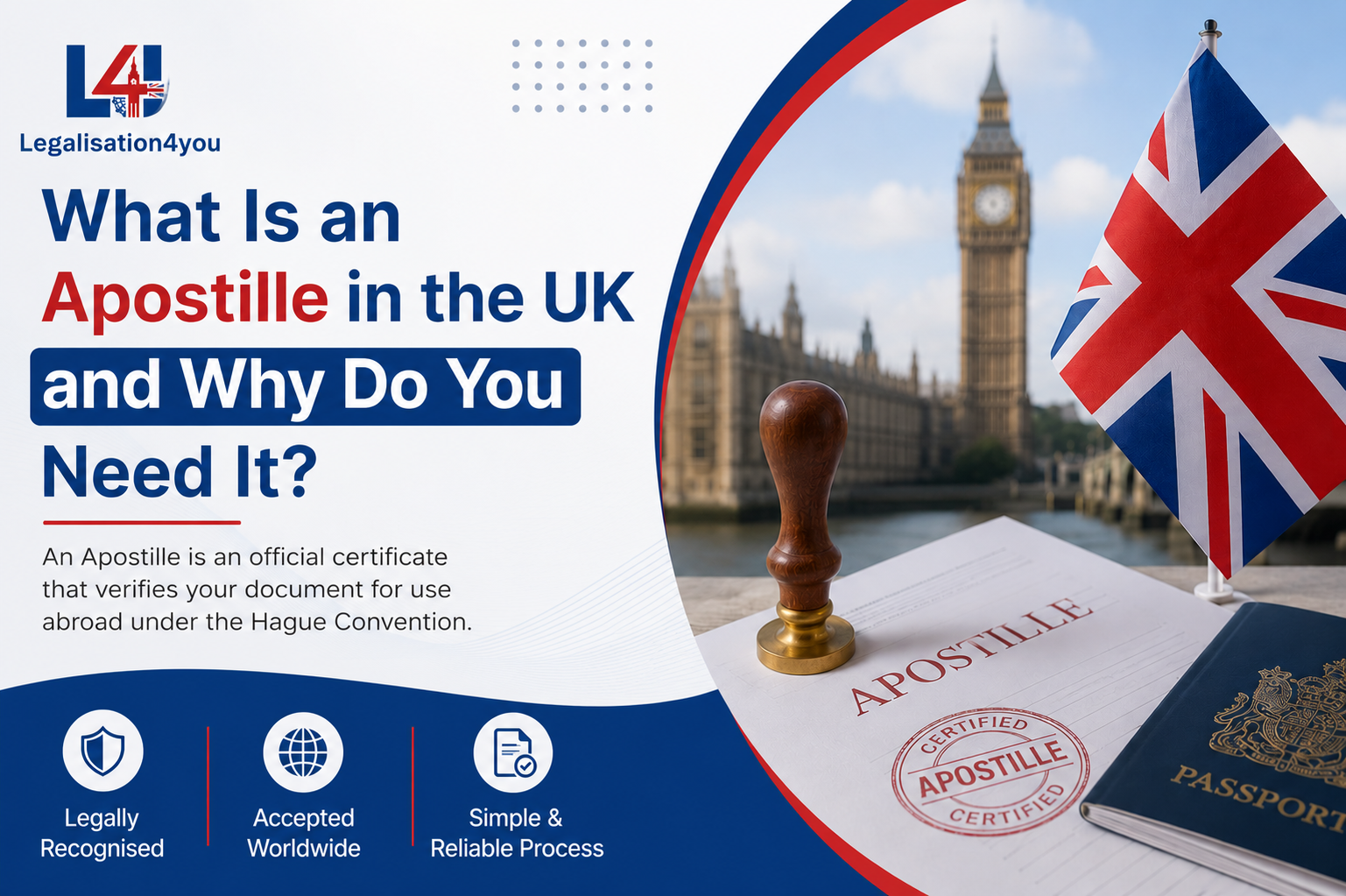
An apostille in the UK certifies the authenticity of the signature, a seal, or a stamp on a document. This certificate is issued by the Foreign, Commonwealth & Development Office (FCDO). You need it as UK documents are only legally recognized and accepted in some jurisdictions that participate in the Hague Apostille Convention.
Did you know? According to the Apostille, the Foreign, Commonwealth & Development Office (FCDO) legalises UK documents for use in over 170 countries under the 1961 Hague Convention.
In short, an apostille in the UK is a government-issued certificate that confirms a document’s signature, seal, or stamp is real. It is attached to birth certificates, degrees, company papers, and more. Without it, your document may simply get rejected abroad. At Legalisation4you, we see this confusion play out daily. People assume a solicitor’s signature is enough on its own. It rarely is, once a document crosses a border.
Key Takeaways
- An apostille confirms a UK document’s signature and seal are genuine for overseas use.
- Over 170 countries accept apostilled documents under the Hague Convention 1961.
- Birth and death certificates are among the most commonly apostilled documents.
- The public cannot visit the FCDO in person; only registered providers can.
- Registered London-based services cut processing time from weeks to just days.
What Getting an Apostille for Documents Really Means
An apostille isn’t a translation. It isn’t a notary stamp either. It’s a separate certificate that the FCDO attaches to your document. This certificate confirms the signature and seal on your paperwork are genuine. Once attached, over 170 countries must accept your document without further checks. That’s the whole point of the Hague Apostille Convention 1961.
Why the Legalisation of Documents in the UK Matters
The legalisation of documents in the UK protects everyone involved. Foreign governments need proof your paperwork isn’t forged. Universities, employers, and courts overseas rely on this proof too. Skip this step, and your visa application could stall for weeks. Your job offer abroad could fall through. Your property purchase overseas could collapse entirely.
When Do You Actually Need One?
You’ll need an apostille whenever a UK document travels abroad for official use. Common situations include:
- Moving abroad for work or study
- Buying property in another country
- Registering a marriage overseas
- Setting up a business branch abroad
- Claiming inheritance in a foreign jurisdiction
- Applying for dual citizenship
Not every document qualifies. Only public documents, or those certified by a solicitor or notary, are eligible.
Apostille British Birth Certificate
An apostille British birth certificate request is one of the most frequent we handle. Expats need this for citizenship applications. Parents need it to enrol children in foreign schools. Couples need it before marrying overseas. Your certificate must be an original or a certified copy. Photocopies without certification get rejected at the FCDO stage.
Apostille Death Certificate
When families require apostille death certificates, they are often emotionally stressed. Generally speaking, this type of document is necessary for the settlement of estates, claiming life insurance benefits, or making probate arrangements abroad. The main consideration is time. If there are any delays, inheritance payments could be held back for several months.
How the Process Actually Works
| Step | What Happens | Typical Timeframe |
| 1. Document check | Confirm eligibility and certification | Same day |
| 2. Solicitor certification (if needed) | Solicitor certifies a copy | 1–2 days |
| 3. FCDO submission | Document sent to the Legalisation Office | Varies |
| 4. Apostille issued | Certificate attached and returned | 1–2 days (registered providers) or 2–4 weeks (postal) |
The FCDO Legalisation Office, based in Milton Keynes, handles postal applications directly. However, the general public cannot visit this office in person. Only registered service providers can hand-deliver documents and collect them faster.
Why Choose London Apostille Services
London apostille services exist because speed matters to most applicants. A registered provider based near London can hand-carry your document to Milton Keynes. This cuts weeks off the standard postal timeline. It also reduces the risk of a rejected submission, since specialists check documents first. For anyone facing a visa deadline or job start date, this difference isn’t minor. It’s often the entire reason the paperwork gets approved in time.
Common Mistakes People Make
Many applicants lose time over avoidable errors:
- Sending an uncertified photocopy instead of an original
- Assuming a notary stamp replaces the need for an apostille
- Missing the correct solicitor wording on certified copies
- Applying too close to a visa or embassy deadline
- Not checking whether the destination country needs embassy attestation instead
Pro Tip Before You Apply: Always confirm what your destination country actually requires. Some countries outside the Hague Convention need embassy attestation instead of an apostille. Submitting the wrong type wastes both time and money. A quick check with a legalisation specialist before you post anything saves real hassle later.
Get Your Documents Legalised Today!
Whether you’re moving overseas, applying for a visa, getting married abroad, or expanding your business internationally, having the right apostille in the UK is essential. Even a small mistake can lead to delays, rejected applications, and extra costs.
Legalisation4you handles the full procedure from checking your documents, arranging solicitor certification where necessary, to your documents submission to the FCDO for apostille certification. Our professionally trained team double-checks your papers before submission, minimising the possibility of rejection while enabling you to submit even by tight deadlines due to our quick and trustworthy service. Give us a call today and allow a specialist of ours to simplify the apostille procedure for you, make it effective at the same time, and save the nerves at the end.
FAQs
1. How long does it take to get an apostille in the UK?
Postal applications directly to the FCDO usually take two to four weeks, longer in busy periods. Registered service providers often complete the process in one to two working days.
2. Can I apostille a document myself?
Yes, you can post documents directly to the FCDO Legalisation Office in Milton Keynes. You cannot, however, visit the office in person as a member of the public.
3. Do all countries accept a UK Apostille?
You get an apostille stamped only with countries that are part of the Hague Apostille Convention. Non-member countries usually require the document to be certified or attested by the embassy instead.
4. What documents commonly need an apostille?
Certain types of documents usually need an apostille, among them birth, death, and marriage certificates, academic documents, company documents, as well as court orders and police checks.
5. Does an apostille expire?
No, an apostille itself doesn’t expire. However, some receiving authorities may reject documents issued too far in the past, so check local requirements first.