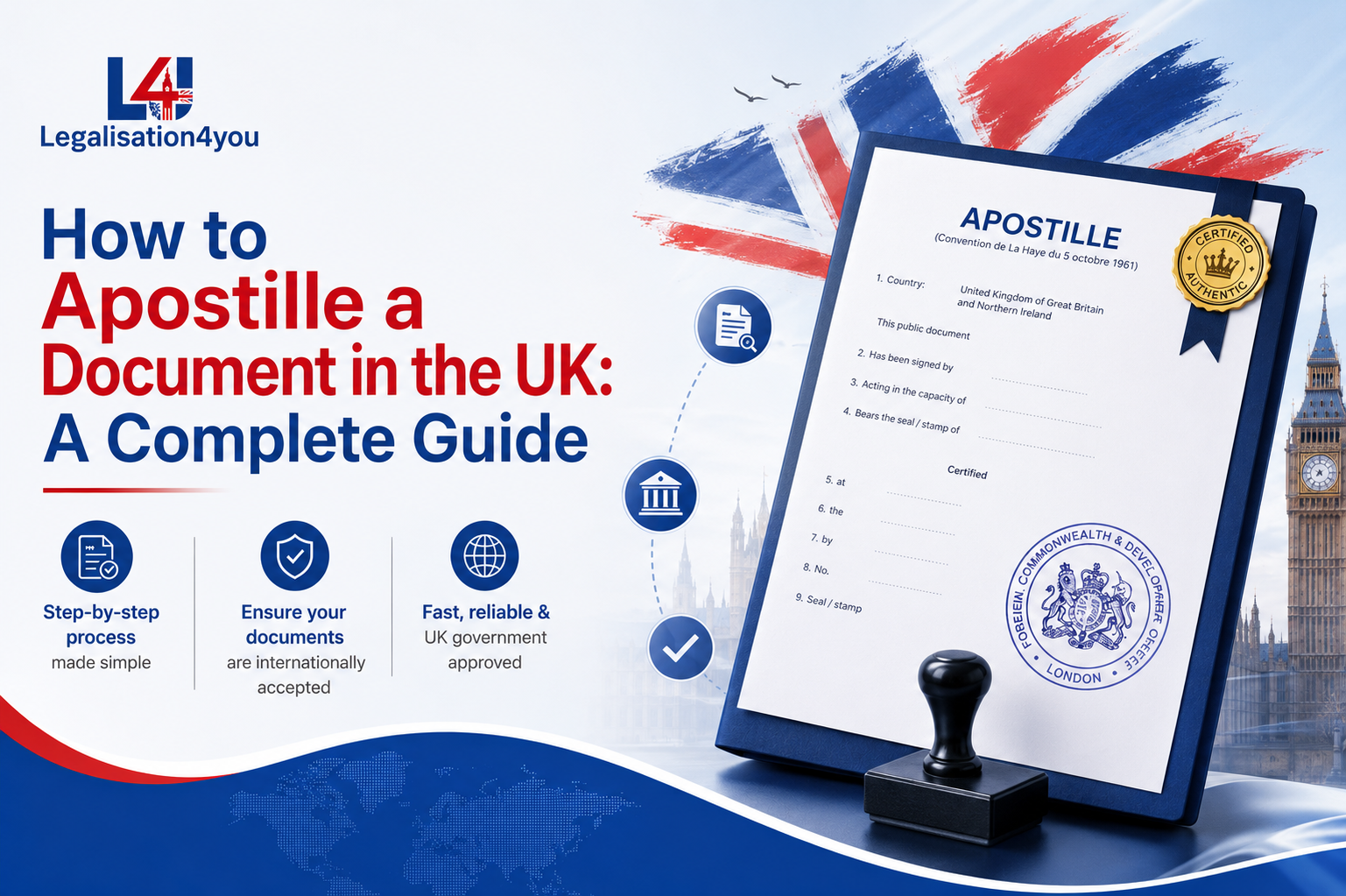
An apostille is a stamp that proves your UK document is genuine, so it works abroad without extra checks. Getting one takes four steps, and most people wrap it up within days once they follow the right order.
Did you know? According to The Apostille, individuals can get their UK document apostilled and legalised if it has the signature, stamp, or seal of an authorised UK public official, such as a notary, solicitor, or government officer.
If you’ve ever searched how to apostille a document at the last minute, you’re not alone. Many UK residents need an apostille for documents used overseas, whether they’re applying for a job, getting married abroad, studying at an international university, or completing legal paperwork. Understanding how to apostille a document can make the process much simpler and help you avoid delays.
At Legalisation4You, we address this question constantly, and honestly, the process is far less painful than it looks once you know what comes next.
Key Takeaways
- An apostille proves your UK document is genuine for use abroad, saving you from extra embassy checks.
- Check whether notarisation is needed before applying for legalisation, since skipping this step causes most rejections.
- The Foreign Commonwealth Office apostille service handles all UK requests, whether you post documents or use a courier.
- A translation apostille is essential for non-English destination countries, covering both the original and translated text.
- Professional help avoids costly rejections and long delays, especially for urgent visa, job, or wedding deadlines.
What Does It Actually Mean to Get a Document Apostilled?
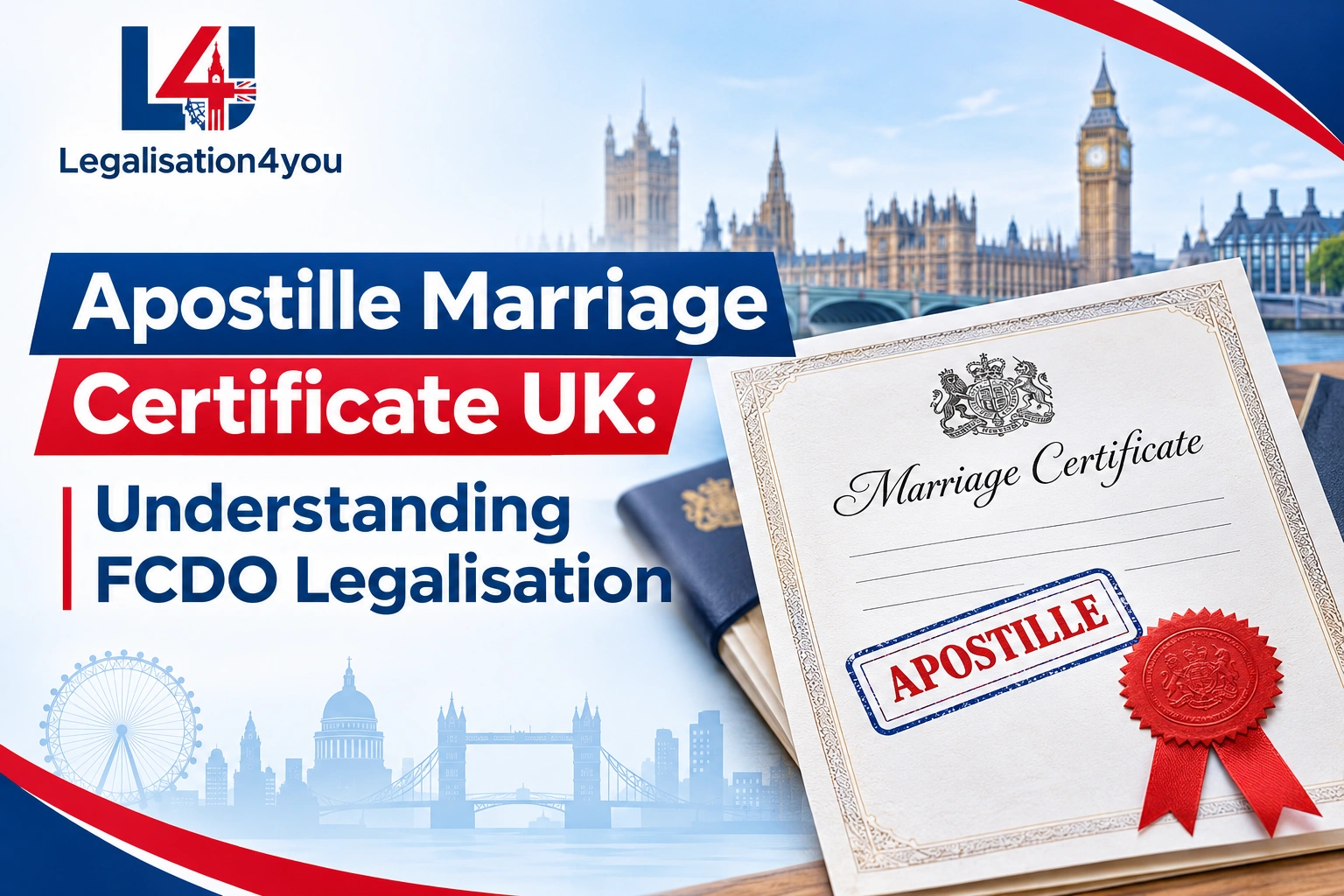
An apostille is a small certificate attached to your document. It confirms that a UK official really did sign it. Once that’s confirmed, foreign authorities tend to accept it without asking further questions.
Understanding Legal Document Authentication
Legal document authentication is really just the umbrella term for all of this. It proves signatures, seals, and stamps are genuine, not forged or outdated. Skip it, and plenty of countries will simply hand your paperwork straight back.
This matters most for legal document authentication tied to court orders, adoption files, or company records used overseas. Get it wrong, and you could be looking at weeks of delay.

When Do You Actually Need Legalisation Documents?
You’ll need legalisation documents any time a foreign authority wants proof that your paperwork is the real deal. This tends to crop up with official, government-issued, or notarised papers; not everyday photocopies.
Common Documents That Usually Need an Apostille
- Birth, marriage, and death certificates
- University degrees and academic transcripts
- Power of attorney documents
- Company incorporation certificates
- Police clearance certificates
Each one gets handled a little differently. Some need notarising before they even qualify for an apostille stamp, so it pays to check first rather than guess.
Steps to Getting Your Document Apostilled
Stick to this order, and you’ll avoid most of the headaches. Skip a step, though, and you may end up starting over.
Step 1: Check If You Need Legalisation First
Some documents need certifying by a solicitor or notary before an apostille will even touch them. Sort this out early; it saves actual time later.
Step 2: Prepare and Certify Your Document
Pull together the original document. Get it notarised if that’s required for your case. This is where most first-timers trip up, usually by sending a copy instead of an original.
Step 3: Submit to the Foreign Commonwealth Office Apostille Service
The Foreign Commonwealth Office apostille team, now folded into the FCDO, handles every UK apostille request. You can post it in or send it via a courier, whichever suits your timeline.
Step 4: Wait for Processing and Collect Your Document
Standard processing runs around ten working days, give or take. Premium services move much faster, sometimes turning things around in 24 hours flat.
Do You Need a Translation Apostille?
Usually, yes. If your document isn’t already in the destination country’s language. A translation apostille covers both the original text and its translated counterpart, so nothing gets lost in the shuffle.
When Translated Documents Need Extra Certification
Some countries go a step further and demand the translation itself be certified separately from the original. Always check the receiving country’s exact rules before you submit anything; they vary more than you’d expect.
Comparing Apostille Service Options
| Service Type | Processing Time | Typical Cost | Best For |
| Standard Post | 8–10 working days | Lower cost | Non-urgent applications |
| Premium/Same-Day | 24–48 hours | Higher cost | Urgent visa or job deadlines |
| Specialist Agency | 2–5 working days | Mid-range cost | Complex or bulk documents |
Common Mistakes to Avoid
- Sending photocopies instead of the original document
- Forgetting the notarisation step for private paperwork
- Assuming every country wants the same apostille format
- Missing the translation requirement entirely
- Leaving the whole process until the very last minute
Pro tip: Call ahead and confirm exactly what the receiving country expects before you post anything off. Requirements shift more often than people assume, and guessing wrong is expensive.
Why Getting It Right the First Time Matters
After helping clients across dozens of countries, one pattern keeps repeating. Rejected applications almost always trace back to a missed notarisation step or the wrong document type entirely. A quick double-check before submission saves weeks of back-and-forth later.
Mistakes here cost more than money. A rejected apostille can delay a visa, stall a job offer, or push back a wedding abroad. That one small stamp carries a surprising amount of weight.
Get Your Documents Apostilled Without the Hassle!
Whether you need a fast turnaround or just some clarity on tricky legalisation documents, getting expert guidance takes the guesswork out of it. Legalisation4You specialises in fast, accurate apostille and legalisation services, walking you through every step so your documents get accepted the first time round. Visit our website to get started today.
FAQs
1. How long does it take to apostille a document in the UK?
Standard processing takes around ten working days. Premium services can complete it within 24 to 48 hours.
2. Can I apostille a document myself, or do I need an agency?
You can apply yourself through the FCDO. Many people still use agencies for speed and accuracy.
3. Do all countries accept the UK apostilles?
Only countries in the Hague Convention accept them. Non-member countries need separate embassy legalisation instead.
4. What is the difference between legalisation and an apostille?
An apostille suits Hague Convention countries. Legalisation involves extra embassy steps for non-member countries.
5. Does a translated document need its own apostille?
Often yes. A translation apostille certifies both the original and the translated version together.